People always act like a skin is “good” because it’s expensive, and that’s half true at best. In CS2, a desirable skin usually has a mix of looks, rarity, history, float, pattern, and plain old status. If you’ve played enough Premier on Mirage or Ancient, you already know the guy with a clean AK-47 Redline and a decent glove combo gets more respect than the dude rocking a random $400 inventory with no theme and no idea.
Desire is weird in Counter-Strike. It isn’t just about shine. It’s about how a skin looks in first-person at 128-tick-like subtick timing, how it holds up under Source 2 lighting, whether it still feels clean after a thousand rounds, and whether other players instantly recognize it on sight. A skin can be objectively rare and still feel dead. Another one can be everywhere and still sell like crazy because it just hits the eye right.
Looks are the first filter
If a skin looks ugly, most players won’t care how “rare” it is. That’s just how it goes. CS players are brutal about this. A skin has to read well in motion, in buy menu screenshots, and in the middle of a Nuke fight when you’re juggling utility, crosshair placement, and your wallet after a 2-3 loss bonus round.
- Strong color contrast matters.
- Clean silhouettes matter more than people admit.
- Animations can make or break it.
- Some finishes just age better under Source 2 lighting.
Take the AK-47. A lot of players love the Fire Serpent because it looks loud and old-school, but the Redline stays desirable because it’s simple, readable, and pairs with basically any glove. Same with the M4A1-S Printstream — not everyone loves white skins, but it looks crisp, premium, and actually stands out without looking like a circus prop.
Rarity is the engine under the hood
Rarity matters because it creates pressure. If a skin drops from a tiny case pool, a discontinued collection, or a sticker combo that only existed during a specific Major, people will chase it harder. Scarcity is the oldest trick in the book, and Valve’s drop system has fed that obsession for years.
That’s why old collection skins from Cobblestone, Cache, or other discontinued pools keep floating around at stupid prices. The Dragon Lore didn’t become a legend because the AWP suddenly became stronger; it became a legend because it sits at the intersection of scarcity, prestige, and pure CS history. Same story with stuff tied to Major stickers from teams like NAVI, FaZe, or a golden era rosters run by s1mple, ZywOo, m0NESY, or donk-era hype.
Float and wear can change everything
Float is one of those boring words that turns into a big deal the second you compare two skins side by side. A Factory New skin isn’t automatically the best-looking version, and anyone who’s bought a skin with ugly scratch placement knows that already. For some finishes, Minimal Wear is the sweet spot. For others, even a low float doesn’t save the design.
Here’s the thing: wear doesn’t hit every skin equally. Some patterns look almost identical across float ranges, while others fall apart fast. Battle-Scarred can be cool on specific items if the grime fits the theme, but most of the time players are paying extra to avoid a skin that looks like it got dragged through Overpass sewage.
- Low float = cleaner finish, usually higher price.
- Mid float can be the smart buy if the wear is subtle.
- Bad wear on the wrong skin kills the vibe instantly.
Patterns are where collectors get obsessive
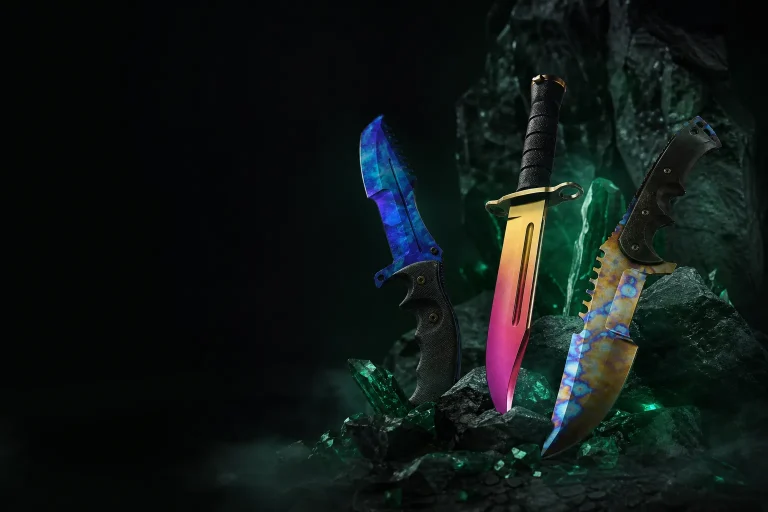
Pattern-based skins are a whole separate rabbit hole. Dopplers, Case Hardeneds, Marble Fades, even certain gloves — the pattern seed can be the difference between “nice” and “holy hell, that’s the one.” Blue Gems are the obvious example. Two AK-47 Case Hardeneds can look like completely different items depending on how much blue shows on the gun body. One is a regular flex. The other is a six-figure collector flex, and yeah, people absolutely pay for that.
Collectors love chase patterns because they’re harder to fake. Anyone can buy a common skin with a sticker slapped on it. Not everyone can get a Phase 2 Doppler with the right color split or a clean emerald finish that actually pops in-game on Dust2 long A under bright lighting.
Popularity is a real force, even when it’s irrational
Sometimes a skin gets desirable simply because the community decides it is. That sounds dumb, but it’s true. CS has always had this weird social layer where some skins become status symbols because streamers, pros, or highlight clips keep showing them off.
When you see a pro on LAN pull out a rare AWP or knife during a Major run, that image sticks. Same with Premier grinders climbing CS Rating and copying what the top players use. A skin can become desirable because it’s associated with winning, confidence, or just that “I’ve been around long enough to know what’s good” energy.
- Pros set trends.
- Creators amplify them.
- Players copy the look.
How the skin pairs with the rest of the inventory
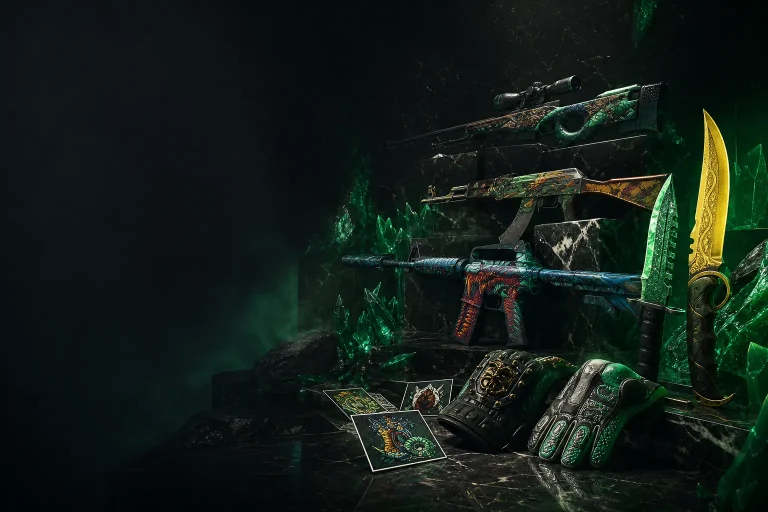
A skin doesn’t live alone. It has to fit the loadout. A flashy knife with ugly gloves looks off. A clean rifle with clown shoes for hands looks off. A lot of inventory value comes from theme cohesion — matching gloves, knives, agents, even pistol skins for Glock, USP-S, and Deagle so the whole setup feels intentional.
That’s why some players will pay extra for skins that are just easier to build around. A black-and-white loadout is popular because it works. A red loadout on Mirage? Fine. A neon rainbow mess with no consistency? That’s a hard no unless you’re farming clips for content and don’t care if the inventory looks like a sticker bomb exploded in spawn.
History and hype can push a skin over the edge
Some skins are desirable because they’re tied to a moment in CS history. Major tournament skins, old operation drops, discontinued cases, and items linked to famous teams all pick up extra weight over time. A skin can be mechanically average and still be worth chasing because it carries that old-school Counter-Strike aura.
That aura matters. Players still remember old NiP runs, the Astralis era, the s1mple vs. ZywOo debates, and now the donk and m0NESY wave in CS2. Anything that feels attached to that timeline gets a boost. Not because the pixels are magical — because people want a piece of the game’s story.
The market price is part of the desirability, but not the whole thing
Price and desirability feed each other, but they’re not identical. A skin can be expensive because it’s rare. It can also be expensive because everyone wants it. Best case, it has both. Worst case, it’s rare but ugly, which means only collectors and speculators care.
That’s why skins with clean designs, low supply, good float ranges, and strong community recognition tend to hold value better. The market punishes ugly rarity and rewards clean demand. It really is that simple — and also not simple at all, because CS players will happily argue for 40 minutes in Discord over whether a skin is “underrated” or just overpriced garbage.
What actually makes a skin desirable?
- It looks good in motion, not just in screenshots.
- It feels rare without being awkward.
- The wear stays clean enough to matter.
- The pattern can make it special.
- It fits real CS culture, from Major clips to Premier flexing.
- People recognize it instantly.
At the end of the day, desirability in CS2 comes down to a skin doing a lot of little things right at once. It has to look clean, feel rare, and carry some kind of identity. If it can do that while sitting in a loadout next to a knife, gloves, and a couple of stickered guns from older Majors, it’s already ahead of most of the market.
The skins people chase aren’t always the fanciest. They’re the ones that make you stop for half a second and think, yeah, that one actually slaps.