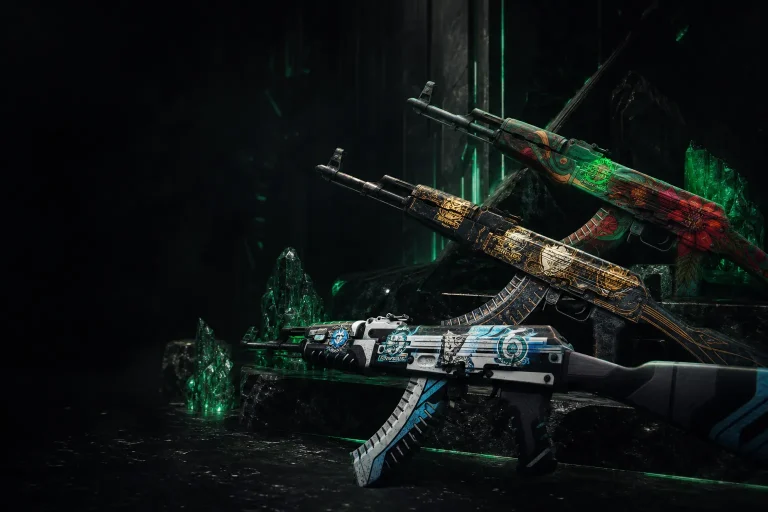
Skins in CS2 are weirdly personal. You can queue into Premier on Mirage with a default AK and still frag out like a demon, but the second somebody drops a clean AK-47 Fire Serpent or a worn-but-beautiful M4A1-S Printstream, the whole lobby starts reading your loadout like it says something about you. Half the time it does.
That’s the fun part. Source 2 gave CS2 a cleaner look, better lighting, and way more shine on finishes that used to feel flat in CS:GO. So now a skin doesn’t just sit there in your inventory — it catches light on Ancient’s gray stone, pops on Dust2’s tan walls, and looks ridiculous in the best way when you’re swinging B apps on Inferno at 0:45 with $2,000 in the bank and a dream.
This isn’t about “best investment” nonsense. This is about style. The skins that define your style are the ones that make your crosshair placement, your buy decisions, and even your tilt feel like part of the same personality. Yeah, that sounds dramatic. CS players are dramatic.
Why skins matter more in CS2 than they used to
CS2 changed the way finishes look in a big way. Subtick doesn’t care what sticker combo you’re running, but your eyes do, and your teammates definitely do when you pull out something clean in a 1v2 after saving a round with a Galil because your team force-bought on round 2 like animals.
The new lighting system makes certain finishes stand out harder than before. Clean whites, bright blues, deep reds, and high-contrast patterns all read better in motion. That matters because CS2 is full of tiny visual moments: the reload animation, inspecting between rounds, rotating through CT spawn on Nuke, or just holding an angle on Banana while waiting for the inevitable HE stack.
- High-contrast skins look best when the map is dark or muted.
- Minimal finishes age well if you swap skins constantly.
- Pattern-based skins hit hardest when the float and wear line up.
- Stickered builds can make a cheap skin look absurdly premium.
The skins that actually define a player’s style
Some skins are loud. Some are clean. Some are pure flex. The best ones feel like an extension of how you play.
AK-47 skins: the loudest statement in the game
If you main T side rifles, your AK says a lot about you. The AK is already the king of rifle rounds — 4-shot body kills, 1-tap potential to the head, and the kind of recoil pattern you either respect or spend 800 hours trying to tame. A skin on it turns that weapon into a signature.
- AK-47 Redline — still the classic “I know what I’m doing” pick. Minimal, sharp, and easy to pair with red gloves or a simple sticker loadout.
- AK-47 Vulcan — blue, aggressive, and a little tryhard in the best possible way. If you’re queuing Mirage and taking mid control every round, this fits.
- AK-47 Fire Serpent — old-school prestige. Not subtle. Not cheap. It says you’ve been around since before half your lobby learned how to counter-strafe properly.
- AK-47 Case Hardened — pure personality. Blue gem hunters, pattern nerds, and people who will spend more time on float charts than on a demo review.
My honest take? If you’re the sort of player who entries hard, talks a little trash, and buys a Molotov for every exec, the AK-47 Vulcan or a properly tuned Case Hardened makes more sense than some random flashy contraption with no identity.
M4A1-S and M4A4: CT side identity crisis, but make it stylish
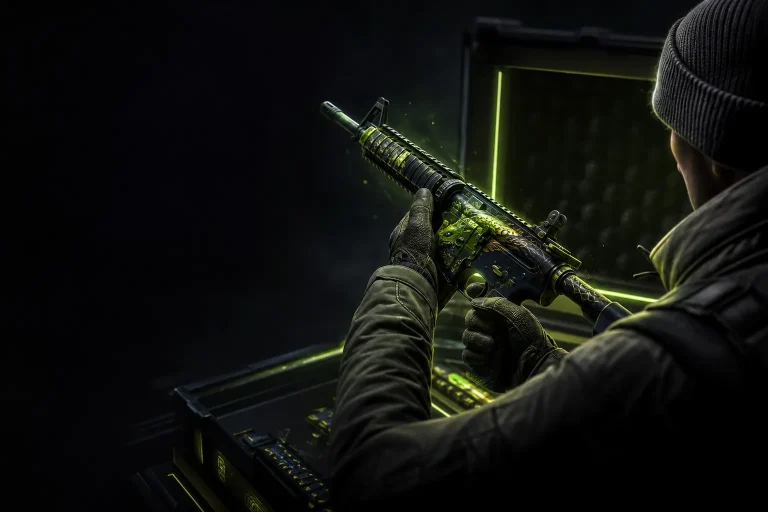
CT rifles have their own vibe. The M4A1-S is quiet, tight, and a little smug — especially in CS2 where the suppressed sound feels cleaner through Source 2 audio. The M4A4 is louder, dirtier, and way better for players who like to spam through smoke on A site Ancient and make somebody regret peeking the bomb train.
- M4A1-S Printstream — probably the most obvious “clean setup” skin in the game. White, black, glossy, and impossible to make look bad.
- M4A1-S Guardian — old-school blue elegance. Not trendy. Just solid.
- M4A4 Howl — the flex flex. If you have one, people notice before the freeze time ends.
- M4A4 Temukau — loud anime energy for players who want their CT side to look like a highlight reel before the round even starts.
There’s a reason a lot of high-rated Premier players stick to one rifle setup. Consistency matters. When you’re staring at your gun every round, the wrong skin can feel noisy. The right one settles you down.
AWP skins: the ego weapon, obviously
No weapon gets judged faster than the AWP. If you’re on 18k CS Rating and dropping 30 on Anubis, nobody cares what your Glock looks like. They care about your AWP. They care because it’s the weapon that changes rounds by itself, and the skin usually matches that energy.
- AWP Asiimov — probably the most recognizable AWP skin for a whole generation of players. Bright, readable, unmistakable.
- AWP Dragon Lore — still the king of “I’ve made it.” It’s the skin people inspect in spawn while pretending they’re not showing off.
- AWP Gungnir — icy, expensive, and nasty in the hands of a calm AWPer.
- AWP Printstream — clean sniper energy. Less medieval dragon, more surgical precision.
There’s a reason pros like s1mple, ZywOo, and m0NESY get associated with iconic AWP setups. The gun already has aura; the skin just sharpens it. If you’re hitting late-round picks on Nuke outside or locking down Mirage connector, the right AWP skin makes the whole thing feel more deliberate.
Style categories: what your loadout says about you
You can sort CS2 skin taste into a few rough buckets, and most players fall into one whether they admit it or not.
- The clean freak — loves Printstream, white gloves, minimal stickers, and knives that don’t scream for attention.
- The old-head — runs Fire Serpent, Redline, Asiimov, maybe an old Cobblestone souvenir, and says everything was better in 2017.
- The flex merchant — Karambit Fade, Butterfly Doppler, high-tier gloves, and a lobby presence before the pistol round even starts.
- The weird pattern guy — spends way too long on float values, phases, and seed numbers, then somehow still top-frags.
- The budget artist — makes a $60 inventory look better than a $6,000 one by using the right stickers, charms, and knife choice.
The funny thing is that none of these are wrong. A good style is just a coherent one. A Dragon Lore with a random glove combo looks messy. A budget AK Slate with a smart sticker setup can look sharper than half the overpaid inventory screenshots people post after their 2-18 loss on Vertigo.
Knives, gloves, and the stuff that ties it together
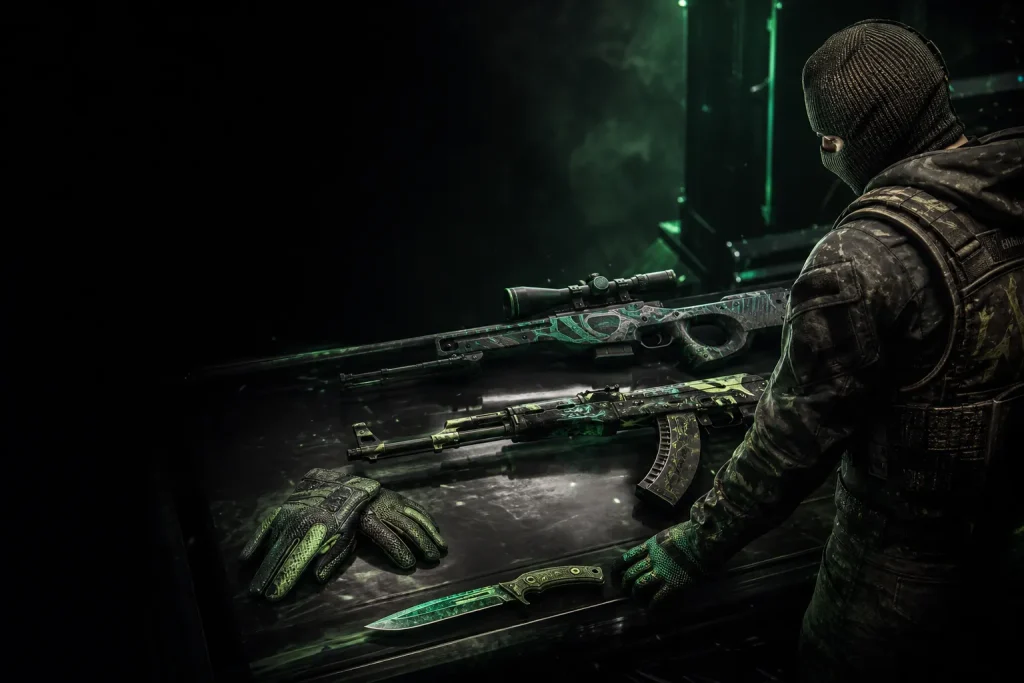
A skin by itself is one thing. A full loadout is where it starts feeling like a real identity. Knives and gloves are the frame around the art.
Butterfly knives still run the show for pure ego. Karambits are still the classic “I peaked in inspect animations” choice. Skeleton knives, if you like that more rugged look, have their own following. And gloves? They matter more than people think, especially if you’re the kind of player who notices whether a finish clashes with your gun while you’re holding a 4,700-dollar buy in a full-loss bonus round.
- Sport Gloves Vice if you want loud and expensive.
- Driver Gloves Imperial Plaid if you like that dark, classy, old-money feel.
- Specialist Gloves Fade if you want your loadout to glow under Source 2 lighting.
- Hand Wraps Duct Tape if you’re committed to the gritty, no-nonsense look.
Matching matters, but don’t make it sterile. The best inventories have tension in them — a little contrast, a little risk, something that feels like a real person built it over years of drops, trades, and bad decisions after midnight.
Picking a style without copying every streamer
A lot of players build their inventory by watching clips and copying whatever a pro or streamer was running that week. That gets old fast. A good style should fit how you actually play.
If you’re an entry fragger, you probably don’t need a hyper-clean, museum-piece inventory. If you’re a calm AWP anchor on CT side, a white-and-black setup might suit you better than neon everything. If you’re the guy who buys every round until the team is broke, maybe lean into skins that look better with eco weapons too — a USP-S Cortex, a Deagle Printstream, a Galil Kami, that kind of thing.
- Play more Mirage and Inferno? Red and tan accents work great.
- Prefer Nuke and Overpass? Clean blues, whites, and steel tones fit better.
- Love Ancient or Anubis? Green and gold finishes pop harder than people expect.
That’s the part people miss. Style isn’t just “expensive.” Style is visual consistency. It’s knowing why your inventory feels right when you’re 13-11 up in overtime and your hands are shaking a little because CS Rating is on the line.
What actually makes a skin memorable
The skins people remember usually have one of three things: a strong silhouette, a color that stands out instantly, or some weird prestige attached to them. Dragon Lore. Howl. Fire Serpent. Doppler knives. Fade patterns. Case Hardened blue gems. These aren’t just skins; they’re status markers from years of trade chatter, Major drops, and highlight clips.
Still, the most memorable skin is often the one that feels like yours. Not the most expensive one. Not the one with the most hype. The one you’ve stared at through 200 Premier games, 30 DMs, and a couple of miserable 0-13s where your team forgot how economy works and bought four AKs into a full save like it was a charity event.
That’s why skins define style in CS2. They’re the one part of the game that stays visible in every round, every map, every stupid force-buy, and every big clutch. And if your loadout says something before you even fire a bullet, that’s not shallow — that’s Counter-Strike being Counter-Strike.
Pick the skin that feels like you’d still want it after a bad loss on Mirage, after a sweaty overtime on Nuke, after a 16-14 grind where your AK barely left your crosshair. That’s the one with style.