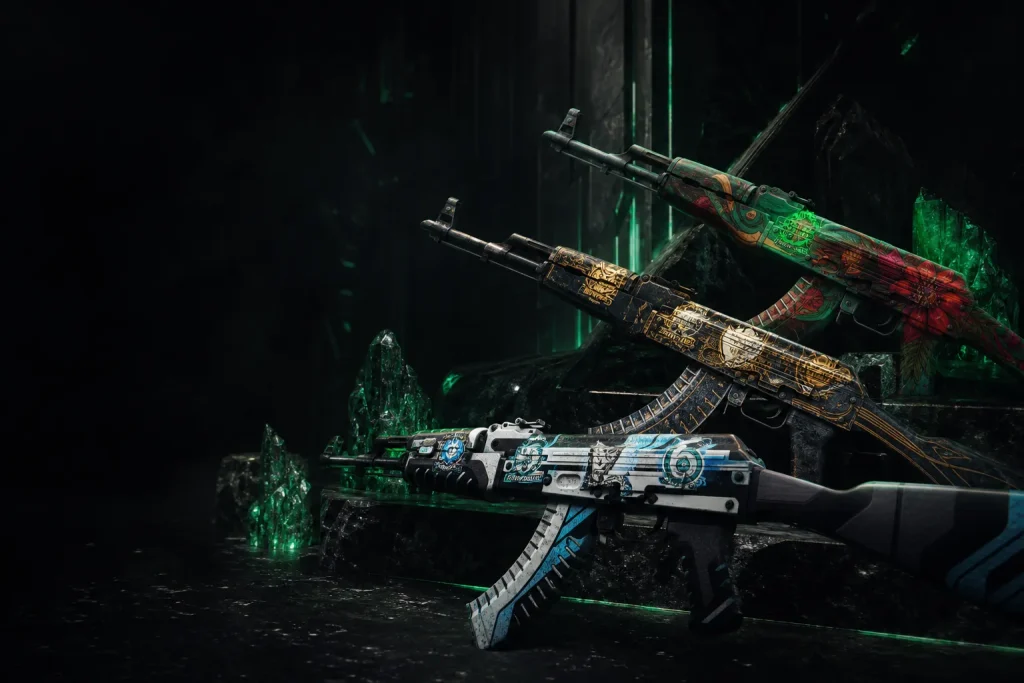
Stickers change a skin’s look in CS2 way more than people admit. A plain AK-47 can go from “meh” to something that looks like it belongs on a highlight reel just because you slapped the right four stickers on it, and if you’ve ever seen a clean holo stack on a Fade, you already know the drip is real.
What makes it funny is that stickers don’t change the weapon’s stats at all. Same spray, same first-bullet accuracy, same 640 tick subtick weirdness in Source 2—none of that moves. But visually? That skin can feel like a different item entirely, especially once you start caring about placement, wear, and how the sticker color plays with the gun’s finish.
Why stickers matter so much
CS2 skins are basically a canvas, and stickers are the part where players start acting like art directors. Some people just throw random team logos on a rifle and call it done. Other people will spend 20 minutes deciding whether a silver holo sits better above the mag or just behind the rear sight. Yeah, we’re that far gone.
The biggest reason stickers hit so hard is contrast. A dark skin with bright foils pops immediately. A clean white skin can make golds look insanely expensive. A red skin with blue stickers? Usually a mess unless you really know what you’re doing. The whole thing lives or dies on color matching and placement, not just on how rare the sticker is.
- Contrast: bright stickers on dark skins stand out fast.
- Theme: matching colors makes the gun feel intentional.
- Wear: scratched stickers ruin the whole look.
- Position: one bad placement can make a 500-dollar craft look like a flea market special.
Placement changes everything
People underestimate placement way too much. On an AK-47, the best sticker spot usually isn’t the center of the gun; it’s the spots that naturally frame the model when you inspect it or pull it out. On an AWP, a clean sticker above the scope can make the whole thing feel balanced. On the M4A1-S, the long body gives you more room to build a proper pattern, while the M4A4 can look busier because there’s just more going on.
Some skins basically beg for symmetry, while others look better when one sticker is the star and the rest support it. That’s why expensive crafts on Mirage sometimes look perfect in screenshots but weird in-game if you’re moving around connector or palace. CS2’s lighting is cleaner than old CS:GO, which is great, but it also means bad sticker placement gets exposed immediately.
Wear, shine, and why float matters
Float affects the skin, sticker wear changes the whole craft, and once you’ve seen a scratched holo on a hot loadout, you can’t unsee it. Factory New is nice, sure, but a bad sticker set on a pristine skin still looks worse than a smart craft on a decent float. The shine of foils and holos in CS2 is a big deal because Source 2 lighting catches reflections differently depending on map and angle. A sticker that looks okay on Ancient A site can look absurdly good under Inferno’s warmer light or totally washed out on Nuke outside.
That’s why people obsess over sticker condition. Scraped stickers are usually a disaster unless you’re going for some very specific old-school look, and even then it’s niche. For most players, the sticker should look like it belongs on the gun, not like somebody attacked it with sandpaper after losing a Premier match at 12-12.
Cheap crafts vs expensive crafts
Not every good-looking skin needs a four-digit craft. That’s the part a lot of players miss. A cheap $10 to $30 combo can look way cleaner than some overcooked collector setup where the stickers are worth more than the gun and still don’t match. You don’t need four Titan holos to make an AK feel special. Sometimes a single clean team holo on a budget rifle does more than a full flex craft with no visual logic.
That said, expensive stickers do have a different presence. A Dignitas holo, iBUYPOWER, Crown, or some old Major-era paper from way back has a kind of weight to it. Not because the gun shoots better—obviously it doesn’t—but because the whole inventory feels more personal when you know the craft has history. That’s a big reason people still chase legendary stickers from old tournaments, the same way they chase rare knife patterns or perfect Dopplers.
- Budget crafts: often the smartest buy.
- Collector crafts: mostly about flexing and resale.
- Mixed builds: underrated.
Stickers and CS2’s visual style
CS2 made stickers look sharper in a lot of cases, but it also made some old crafts feel different in a bad way. The cleaner Source 2 presentation means sticker finishes can either glow nicely or clash hard depending on the skin. If you’ve got a holo-heavy loadout and you’re playing Mirage mid with a bright skybox, the gun can basically flash you back every time you inspect it. That’s the tradeoff.
This matters more now because people care about loadouts way more than they used to. Premier rating is a status thing, sure, but so is having a pistol, rifle, and AWP setup that all look coherent. Guys will grind from 8,000 CS Rating to 20,000+, then turn around and spend another two hours in the inventory trying to make their AK and Deagle match. That’s pure CS player behavior.
What actually makes a sticker craft look good
If you strip all the hype away, good sticker crafts usually share the same traits. Nothing magical. Just solid design sense, the kind you get after staring at weapon skins during queue time for years.
- One clear theme. Don’t mix gold, blue, red, and pink just because you can.
- Match the weapon’s base color. A black skin can carry almost anything. A loud skin can’t.
- Use the right finish. Paper, foil, glitter, holo—they all hit differently.
- Avoid clutter. If every slot is screaming, the craft looks cheap.
The best-looking skins usually feel like the stickers were always supposed to be there. That’s the whole trick. You don’t want the gun to look decorated. You want it to look complete.
Why players care so much in the first place
Because CS has always been part shooter, part obsession. A rifle skin with the right stickers feels like your own thing in a game where everybody’s using the same AK-47, the same AWP, the same Glock. That little bit of personalization matters. It’s the same reason people remember a famous pro’s loadout or a Major-winning sticker craft years later—those tiny visual details stick in your head.
And honestly, once you’ve played enough, you start judging skins in motion, not in inventory. You see how they look when you’re jiggle-peeking B apps on Inferno, holding a Nuke ramp swing, or posted in Ancient cave. That’s when stickers earn their keep. Not in a static screenshot. In the messy, moving, angry reality of an actual CS2 round.
So yeah, stickers change a skin’s look a lot. Sometimes they save an ugly gun. Sometimes they ruin a good one. And when they hit, they hit hard enough that you stop thinking about the gun as a skin and start thinking about it as your skin—the one you keep buying back after a 1v2 on Anubis because now it actually looks right in your hands.