Every CS2 team says they want “structure,” but what they usually mean is five guys standing around mid waiting for someone else to make the first move. That’s a default. It’s safe, it’s clean, and if you’re playing Premier at 18,000 CS Rating against randoms with decent aim, it can work just fine. Against real teams, though? A default is only the starting gun. The teams that turn a boring 2v2 into a round win are the ones that know when to stop hovering in spawn and actually punch a hole somewhere.
That’s the whole difference between looking organized and being dangerous. A default gives you map control, info, and the first bit of economy pressure. A legendary round starts when someone spots the gap, calls it fast, and the team actually trusts the call instead of overthinking it for 20 seconds like it’s some sacred tactical briefing. CS2, with subtick and the Source 2 feel, rewards clean spacing and timing, but it still punishes hesitation harder than people admit.
What a real default looks like
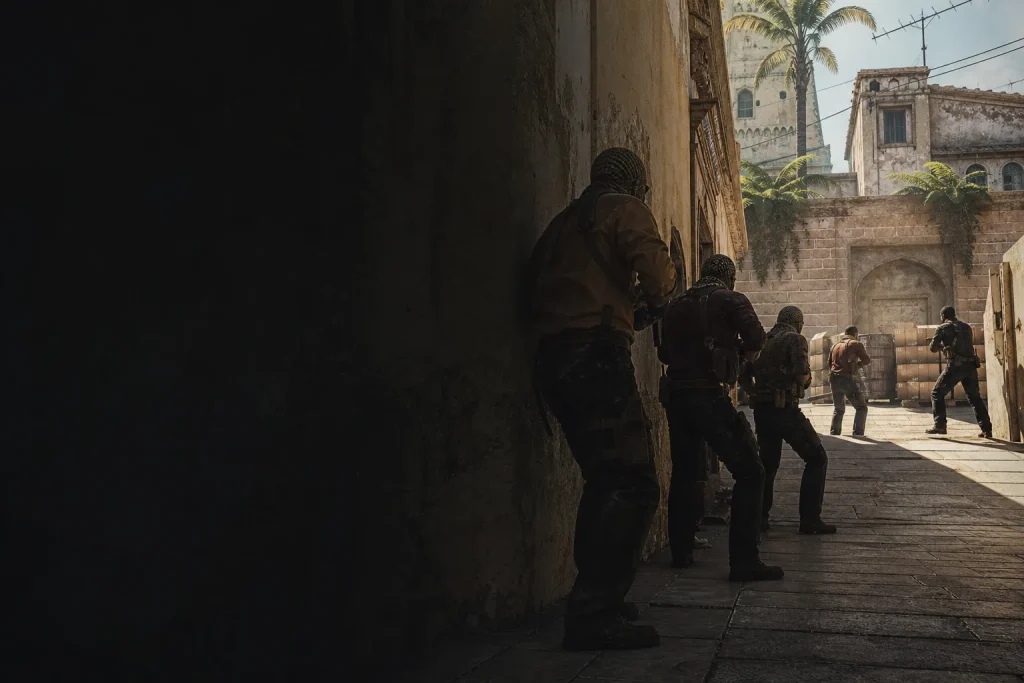
A proper default isn’t five players posting up in the same boring lane. It’s controlled noise. You’re probing multiple areas, forcing rotations, and making the CTs burn utility before the execute even starts. On Mirage, that usually means one late palace lurk, one player threatening B apps, two working mid, and a connector guy ready to punish a push or a stack. On Inferno, it’s banana pressure, top mid presence, and a lurk hovering apartments so the CTs can’t just greed their utility and chill.
- Mirage: mid control first, then punish connector.
- Inferno: banana is the round.
- Ancient: don’t ignore donut and ramp.
- Nuke: outside takes patience, not ego.
- Anubis: mid control wins everything if you’re sharp.
The point is to make the map uncomfortable. If the CT side has no idea whether you’re setting up a B hit or faking into A, that’s already value. You don’t need a flashy 5-man rush every round. You need information, pressure, and the ability to shift gears before the defense settles in.
Why bad defaults die so often
Most bad defaults are just slow death with extra footsteps. Players spread out, nobody takes initiative, and the clock bleeds down until you’re forced into a dry hit with 18 seconds left. That’s not “discipline.” That’s bad tempo. Real teams know how to take space early, then either collapse fast or reset the map and bait out utility for the final hit.
The classic mistake is this: three players do their part, two players do absolutely nothing, and now the round is hanging on one hero peek from s1mple 2021 cosplay. Not happening. Even donk, who plays like he’s trying to break the server in half, still benefits from teammates feeding him the right timing and spacing. Raw aim matters, sure. But aim without timing is just highlight reel bait.
How legendary rounds actually start
Legendary rounds usually start ugly. A flash forces a shoulder peek. A smoke lands a second late. Someone hears a step in apps and decides, right there, that the round belongs to them. That’s the bit people miss when they talk about “perfect executes.” The cleanest rounds in CS2 often begin because one player saw a weakness and the team trusted the read immediately.
Take Nuke. If your default gets lobby control and outside pressure, you’ve got choices: split lower, hit A through hut and squeaky, or fake the whole thing and catch the rotator sleeping. On Vertigo, if you’ve got ramp and mid control, the CTs are stuck making ugly decisions. On Overpass, controlling bathrooms and connector means the map starts bending around your team. That’s when defaults stop being passive and turn into a trap.
- Take space early.
- Force utility.
- Read the gap.
- Hit fast when they blink.
That last part is the money. Teams that wait for permission lose rounds. Teams that recognize the opening and send it instantly win the stuff that matters — the 1v2s, the half-buy scrambles, the 3-rifle rounds where one AK and a Galil suddenly look like a whole economy problem for the other side.
Economy turns defaults into pressure
CS2 economy is still brutally simple at heart. Win a round, and suddenly your side has $3,250 or $3,000 plus kill money to work with; lose with bomb plants and you might still have enough to force into a decent next round. That pressure changes how defaults function. A good default doesn’t just get map control — it makes the enemy spend money on counter-nades, anchor rifles, and awkward repositions that ruin their next buy.
That’s why teams like to drag out the clock when they’ve got a lead. If you’re up 9-6 on Ancient and the CTs are already low on nades, forcing them to hold every angle with M4s and half utility is mean in the best way. You’re not giving them a fair fight. You’re grinding their economy until a bonus round becomes a disaster and suddenly the AWP on the other side is stuck in a saving position like it’s 2016.
What separates the good teams from the stupid ones
The good teams are annoyingly patient until they’re not. They’ll default for 30 seconds, get mid control, show presence, and then slam the exact weakness they found. The stupid teams keep “defaulting” until there are 12 seconds left and someone’s yelling to go B with zero flashes. That’s not a strategy, that’s a prayer.
Look at the best modern CS: ZywOo doesn’t need chaos to be effective, m0NESY can take over a round from a weird off-angle, and players like ropz make defaults look effortless because they understand where the map breaks. The lesson isn’t to copy their mechanics. Most of us aren’t doing that anyway. The lesson is that discipline and aggression aren’t opposites. The great teams use both without getting stuck in fake correctness.
From default to legendary on each map
Some maps reward defaults more than others, but the principle stays the same: gather info, win space, then attack the weak point. Mirage is probably the clearest example because mid control opens so many options. Inferno still lives and dies by banana and apartments pressure. Nuke needs proper outside control or you’re just donating rounds. Ancient and Anubis punish lazy map play faster than people expect because one lost lane can snowball into a full-site collapse.
- Mirage: mid first, then decide if you’re hitting A, splitting B, or punishing connector greed.
- Inferno: banana utility, late apps pressure, and don’t waste your last smoke on nothing.
- Nuke: outside control is the round; without it, you’re guessing.
- Anubis: mid and water control matter way more than casual players think.
- Ancient: donut pressure can break the whole CT setup open.
Even Dust2 — yeah, the map everyone thinks is just “go long and pray” — still rewards the same logic. Take long, make the CTs respond, then either split A or hit B when the setup looks thin. If you’re just running around trying to “make a play,” you’re handing the other team free reads. And in Premier, where one sloppy round can swing your CS Rating by a chunk, that kind of laziness hurts more than people want to admit.
The part nobody wants to hear
Most teams don’t need better strats. They need better timing. They need to stop confusing movement with purpose. A default is supposed to create a problem for the other side, not give both teams time to sip coffee while nothing happens. When the round finally opens, it should feel like the map got kicked in the teeth.
That’s what makes a round memorable. Not the five-man hero rush. Not the dry peek spam. The moment a default snaps into a read, the enemy rotator is half a step late, and your team is already on the site planting before the retake even starts. That’s CS2 at its best — clean info, ugly pressure, and one sharp decision that turns a quiet round into the one everybody remembers.