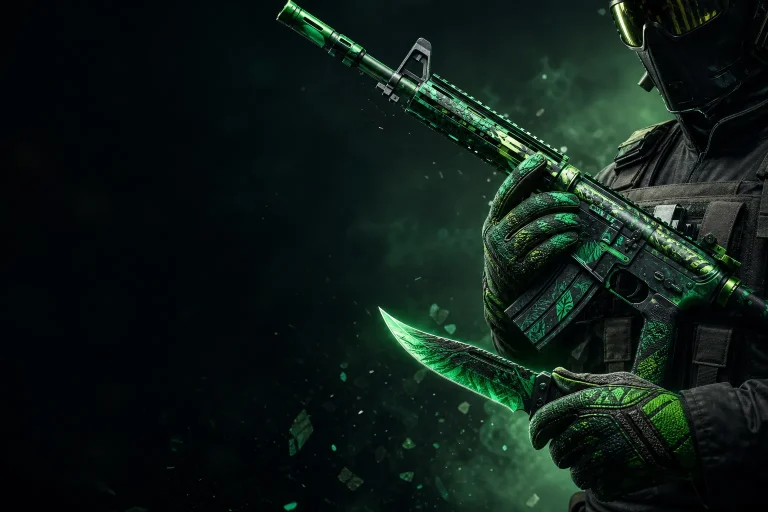
Some CS2 skins just hit different. You can tell the second they drop in-game, before the float, before the inspect animation, before some guy in Premier starts typing “buy skins?” in all chat after losing pistol on Ancient. A real classic skin isn’t just about being expensive or rare. It’s about timing, silhouette, memory, and the weird little way Counter-Strike players attach a story to a digital gun faster than they’ll trust a random with a Deagle in round 30.
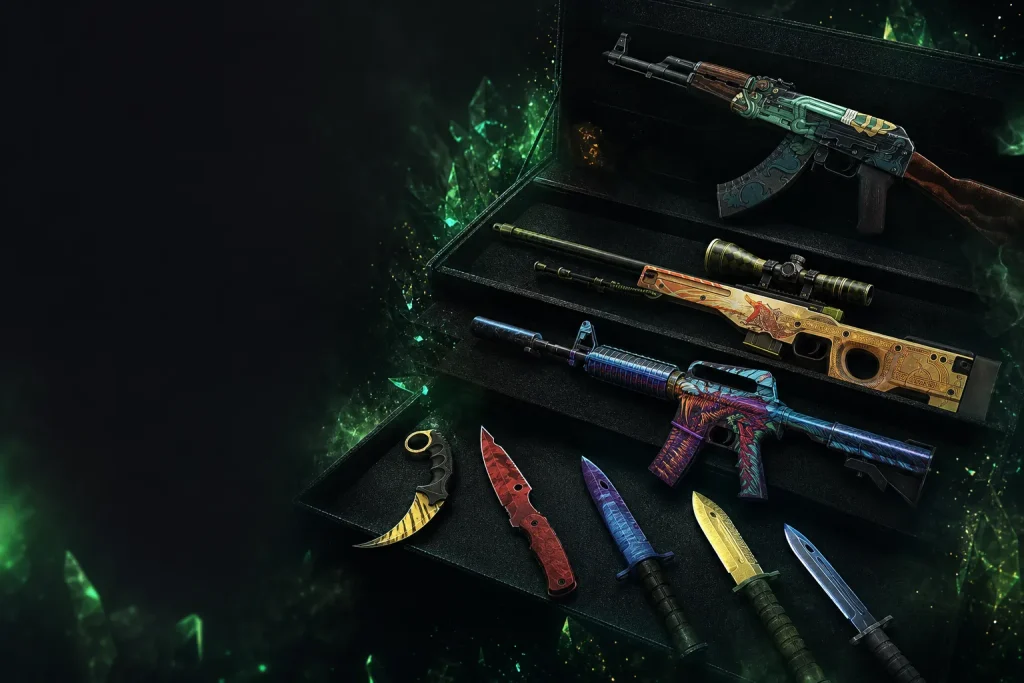
That’s why some skins stay famous for years while others vanish into the background. The best ones don’t need a marketing campaign every three months. They survive because they look clean on T-side, they don’t get old after 5,000 hours, and they somehow become tied to the era they came from. Think Dragon Lore, Karambit | Doppler, AK-47 | Redline, AWP | Asiimov, M4A4 | Howl. You don’t even need to inspect them. You already know what they are.
Timing matters more than people admit
A lot of classic skins became classics because they arrived when CS was exploding culturally. The old CS:GO years, especially around big Majors and the rise of streaming, were basically perfect fuel. A skin that lands when thousands of people are watching a Boston Major, a Katowice final, or some mad s1mple highlight reel is going to stick harder than one released in a quiet patch week nobody remembers.
And yeah, Source 2 changed the way a lot of people look at skins too. Better lighting, sharper materials, cleaner reflections — all of that makes good designs pop and bad ones look even more goofy. A skin with strong contrast or a readable pattern survives because it still looks good under CS2’s brighter rendering, while washed-out, busy stuff just gets exposed. If your skin looks like it was designed by someone who’s never played Mirage palace in their life, it’s probably not aging well.
Clean design beats noisy design
The biggest classics usually have one thing in common: you can recognize them instantly from a distance. That matters in Counter-Strike because your brain is already processing crosshair placement, utility, sound cues, and whether that guy on B site just baited you into a 1v2 on Inferno. A skin that reads cleanly in motion wins. A skin stuffed with random neon junk doesn’t.
- AK-47 | Redline: simple, sharp, and easy to pair with gloves.
- AWP | Asiimov: loud without being cluttered.
- Karambit | Fade: pure flex, no extra nonsense.
- USP-S | Kill Confirmed: busy, but the theme is strong enough to hold it together.
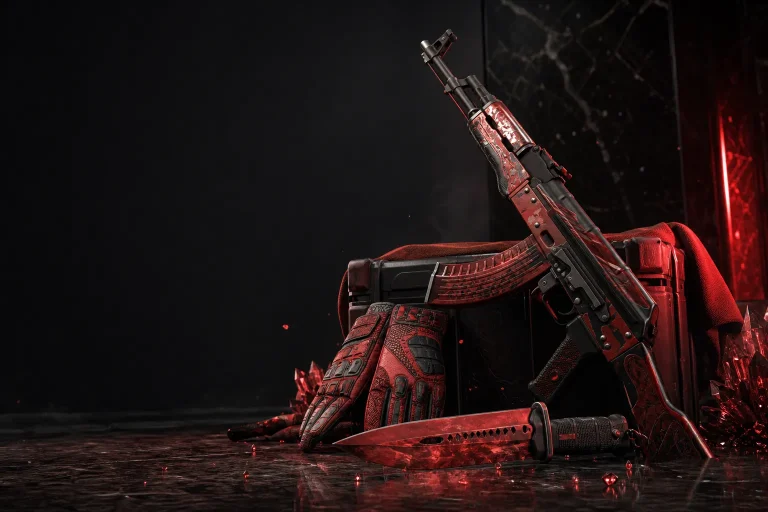
The Redline is a perfect example. It’s not flashy in the cheap way. It’s just a black carbon look with red accents, and that’s enough. It works with basically every sticker combo, every glove setup, every agent, every era. Same logic with a lot of knife classics — the Karambit doesn’t need to scream because the inspect animation and blade shape already carry the whole thing.
Some skins become status symbols by accident
Classic skins often turn into shorthand for skill or money, even if that wasn’t the original point. A loaded inventory in CS has always been a bit of a flex, sure, but some finishes became cultural markers because pros used them, trade-up stories circulated, or they showed up in iconic clips. When a skin gets tied to pro players like ZywOo, m0NESY, or donk in highlight edits, it picks up heat fast. People don’t just want the skin. They want the feeling of holding the same gun as the guy who just deleted three players through Nuke smoke.
That’s why nostalgia matters so much in CS2. Old players remember the skins they saw during the classic CS:GO years, and new players pick up the same names because those items have already been stamped into the scene. By the time a skin has survived multiple map pools, several economy changes, and a full engine shift, it’s more than a cosmetic. It’s part of the game’s memory.
Economy and availability shape the myth
Rare skins age differently from common skins. No mystery there. If something had low supply, awkward case odds, or was tied to an old collection that stopped dropping, its market story gets bigger over time. Scarcity creates lore, and lore drives demand. That’s why people still talk about old collection pieces like they’re relics from a lost patch era instead of just in-game items.
At the same time, a skin can be available everywhere and still become a classic if the design is strong enough. That’s the weird part. The AK Redline was never some ultra-rare museum piece, but it became a default for half the player base because it looked good, it was affordable, and it never felt embarrassing to equip in a 100-point Premier match or a sweaty Faceit pug. Classic doesn’t always mean expensive. Sometimes it just means correct.
- Low supply helps.
- Strong visuals help more.
- Pro exposure can carry a skin for years.
- If it clips badly with gloves, it ages like milk.
Skin memory is real
Players remember skins the way they remember specific rounds. You’ll think of a Dragon Lore and picture a dusty Overpass AWP angle or some ancient clip from an old Major broadcast. You’ll think of an Asiimov and immediately see an eco round clutch on Train. You’ll think of a Howl and remember the drama around it, not just the artwork. That memory sticks because CS is a repetition machine — same bombsites, same buys, same clutch situations, over and over, until the visuals get welded to the emotions.
That’s also why classic skins tend to be readable under pressure. If you’re in a 1v1 with 40 HP, 12 seconds left, and you’re trying to clear Mirage jungle while your teammate screams about default smoke timing, you don’t want some cluttered skin that disappears into the background. You want something you recognize instantly. Clean color blocking. Strong shape language. Maybe a little shine if you’re feeling rich. Nothing that makes your gun look like a toy from a loot box fever dream.
What actually lasts in CS2
The skins that last usually do three things at once: they look good in motion, they fit the Counter-Strike identity, and they survive changing tastes. A classic AK skin still feels like an AK skin. A classic AWP skin still feels deadly. A classic knife still feels like a status item without looking like it was designed for a different game entirely.
Here’s the blunt truth: most skins are content noise. A few are culture.
Those are the ones people still name-drop years later when they’re talking about old Majors, rare drops, Premier grind, or the first time they saw someone pull out a bayonet and suddenly the whole lobby started moving like it was a best-of-three on Inferno with cash on the line.
That’s the standard. If a skin can survive Source 2 lighting, pro play hype, market swings, and five more years of players saying “this is my final inventory” before buying another knife, it’s probably a classic already.